

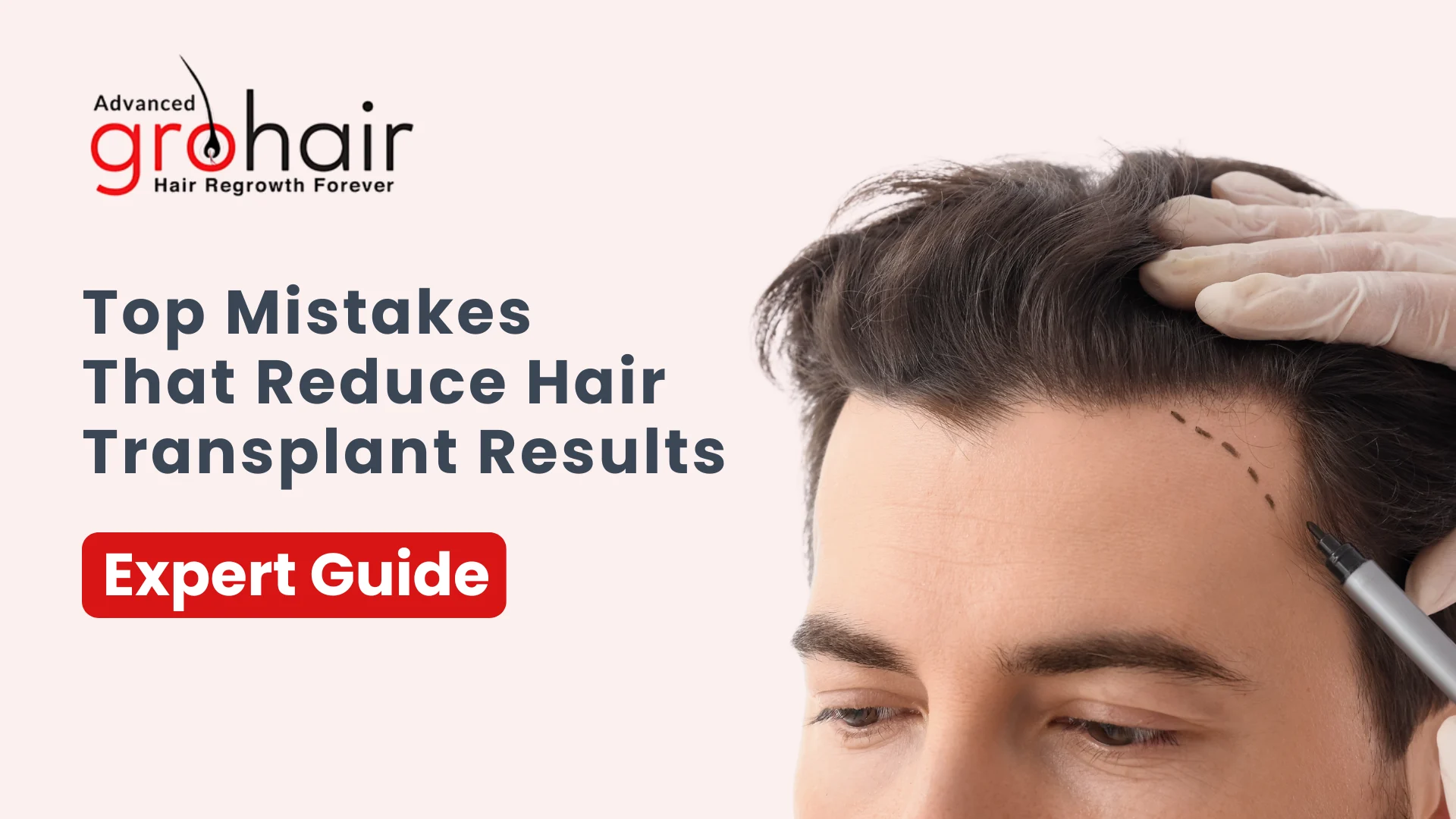
Most people judge hair transplant results by three things: the growth of new hair, how natural the coverage looks, and whether the final density meets expectations. A hair transplant can be done well, yet outcomes may drop because of small decisions made before and after the procedure.
This guide covers the mistakes to avoid, why they matter biologically, and how to protect your progress. It also explains common “false alarms” (like shedding) that panic many patients so you don’t accidentally sabotage your own recovery. Before-and-after photos only show the start and end—this helps you understand what happens in between.
How results get compromised
A hair transplant works when each graft settles into the scalp, establishes a stable blood supply, completes wound healing, and then follows the normal hair growth cycle. Your job during recovery is to reduce friction, contamination, and inflammation so graft survival stays high.
Friction, heat, and infection risk can reduce blood flow and reduce survival rates—in other words, they can “ruin your results” even when the procedure itself went fine.
Mistakes made before getting a hair transplant
Ignoring hair loss pattern and future thinning
A transplant moves hair; it doesn’t stop hair loss. If your hair loss pattern is still progressing, surrounding natural hair may continue to thin, changing the look over time. Thinking about future hair loss is part of setting realistic expectations and protecting long-term appearance.
Choosing a clinic the wrong way
A common mistake is picking a clinic based only on discounts or promises. To choose a clinic in a smart, educational way, look for:
- Clear explanation of technique and limitations
- Hygiene and follow-up structure
- Transparent donor planning and realistic coverage discussion
A good hair transplant clinic should feel organized and medically disciplined, not sales-driven.
Misunderstanding technique and limits
You’ll see terms like follicular unit extraction (FUE). It’s one common approach to harvesting grafts individually, but the key limit remains the same: the plan must be based on your hair—donor supply, scalp characteristics, and hair quality.
That’s why the best hair transplant results usually come from boring fundamentals: planning + safe execution + disciplined healing. If you’re searching for the best hair transplant, prioritize the process and track record over slogans. A skilled surgeon and a solid team matter more than marketing; the surgeon also affects donor management and placement—things you can’t fix later.
The first 48 hours: biggest-risk phase for newly transplanted grafts
In the first 48 hours, grafts are newly transplanted and easily disturbed. Many clinics give strict instructions for hair for the first 48—follow them exactly.
Touching, rubbing, or scratching
Avoid touching the recipient area. Avoid rubbing with hands, towels, caps, pillows, or collars. Scratching the scalp can lift scabs, irritate skin, and raise infection risk. This is one of the most damaging common mistakes because it’s often subconscious.
Sleeping flat instead of head elevated
Swelling and friction risk go up when you’re careless at night. Sleep with your head elevated—many instructions literally say sleep with your head elevated. Sleeping flat can worsen swelling and makes accidental rubbing more likely.
Washing errors (pressure + products)
Most washing problems come from being too aggressive:
- Follow your schedule to wash your hair (don’t rush it).
- When you use shampoo, keep it gentle and low-pressure.
- Think “shampoo and avoid squeezing” — clean without mechanical stress.
- Avoid experimenting with wrong products or harsh formulas.
One improper wash (hot water blast, rubbing, or vigorous towel drying) can irritate the scalp and disrupt healing.
Post-op weeks: habits that can quietly reduce results
This is when people get overconfident.
Exercise too early
Doing something strenuous too soon, especially sweaty strenuous activity, can irritate healing tissue. Follow your timeline and ramp up gradually, especially with helmets/contact sports.
Sun and heat exposure
Early on, avoid direct sun exposure because UV and heat can worsen inflammation and redness on a healing scalp.
Pools/steam/sauna
These environments can increase irritation and contamination risk. This is the practical meaning behind “what to avoid after hair transplant” during the early weeks.
Panic mistakes
Shedding ≠ failure
After hair transplant surgery, transplanted hairs can shed. People panic because results look worse before they look better. In many cases, the hair shaft sheds while the follicle remains and regrows later.
Shock loss and “failed hair” fear
Some people shed nearby natural hair (shock loss). That triggers fear that transplant can fail and leads to rash decisions. In most cases, patience and consistent care are better than constant tinkering.
Product hopping and obsessive checking
One of the most common mistakes people make is changing routines weekly—new serums, harsh shampoos, extra scrubbing—trying to “force” results. Your goal is to ensure your hair environment stays calm: clean scalp, low friction, no random experiments.
Months 2–12: habits that spoil the final look
Ignoring ongoing hair loss
Transplanted follicles may be stable, but surrounding hair can still thin. That’s how people feel like the overall look is less full later. This is part of long-term hair loss management.
Chronic inflammation and root damage risk
Persistent scalp irritation, dandruff, or folliculitis can trigger scratching and discomfort and may contribute to damage to the hair roots in some situations. Prioritize stability: “healing and reduce inflammation” is not just a phrase—it’s a practical goal.
Unrealistic density expectations
A transplant improves coverage, but it may not recreate teenage thick hair everywhere. Focus on natural coverage and healthy scalp habits for healthy hair. People often describe transplanted follicles as permanent hair, but “permanent” doesn’t mean immune to poor habits.
If you want optimal results and successful results, treat this as a long process—not a one-week event. That mindset improves the overall success of a hair transplant.
Clinic and surgeon factors (what you can’t fix later)
Some outcome drivers are technical and mostly controlled by the clinic and surgeon.
Donor area planning and scarring
Overharvesting can make the donor area look patchy and can increase visible scar concerns, especially with very short haircuts.
Graft handling and placement
Poor handling can reduce graft survival. Placement angle/direction affects how natural styling looks. This is where experience and protocols matter—another reason a reliable clinic and an experienced hair transplant surgeon can reduce avoidable risk.
Hairline design
A natural hairline isn’t ruler-straight. A good new hairline fits facial proportions and future loss risk. Done well, it supports natural results and natural-looking results, so your new hair blends in rather than shouting.
Top common mistakes to avoid
- Touching/scratching scabs — avoid touching
- Rubbing with towels/caps — avoid rubbing
- An aggressive wash routine — wash your hair gently
- Using harsh or wrong products
- Sleeping without support — keep head elevated
- Early workouts — avoid strenuous activity
- Sun/heat — avoid direct sun exposure
- Skipping follow-ups and ignoring warning signs
- Smoking — avoid smoking
- Product hopping from anxiety
These common mistakes include habits that can lead to irritation, infection risk, and even graft loss. In short: protect early healing so you avoid hair transplant failure scenarios. Repeated trauma can reduce survival rates even after a technically good procedure.
When to contact your clinic
Some redness and itching can be normal. But contact your clinic promptly if you notice:
- Increasing pain, pus, fever
- Spreading redness, foul smell
- Rapid worsening swelling
This matters for all hair transplant patients, because early treatment prevents bigger setbacks following hair transplant surgery.
Advanced GroHair Clinic – Medical Team
Madurai
Frequently Asked Questions
Click to expand
1. When do grafts become secure after hair transplant surgery?
+
They stabilize over time, but early days are fragile—follow your clinic’s schedule strictly.
2. Is shedding normal after a hair transplant procedure?
+
Yes, shedding can occur before regrowth as the follicles cycle. This is a normal part of the process often referred to as "shock loss."
3. How do I wash your hair safely in the first 48 hours?
+
Follow instructions; keep pressure low and avoid rubbing. Gentle cleansing matters most to prevent dislodging the new grafts.
4. When can I restart strenuous activity?
+
Follow your timeline—heat, sweat, and friction are the main early risks. Most clinics suggest waiting 2 to 4 weeks before returning to high-intensity workouts.
5. What affects graft survival and survival rate?
+
Trauma, infection risk, inflammation, and reduced blood flow can reduce outcomes. Proper post-op care is essential for maximizing the survival rate.