

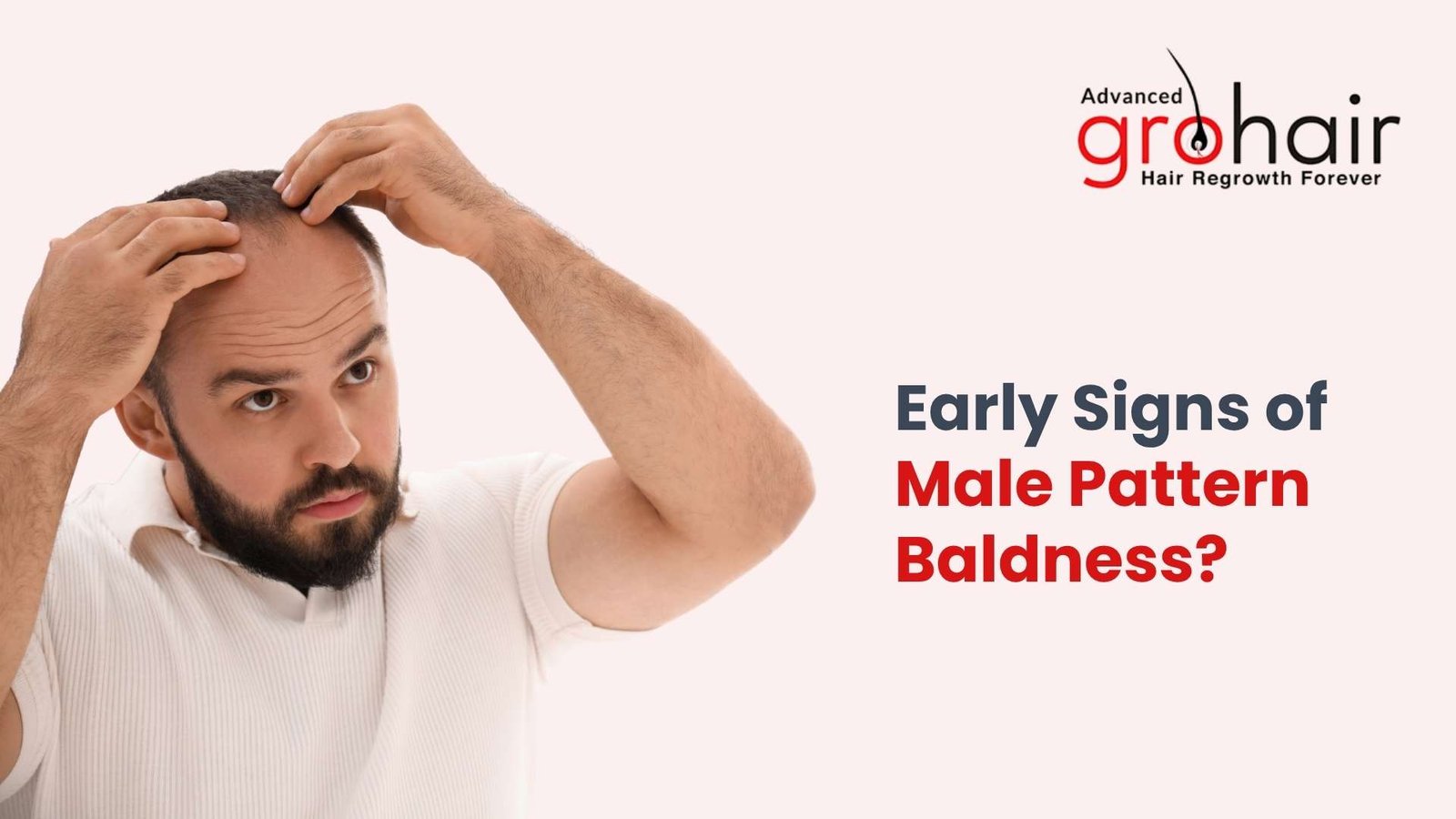
Loss of hair does not occur overnight. It is a slow process, and losing hair can be frustrating and even overwhelming to many men. You can start by observing a slight loss of hair, a slight loss of hair density, or changes in your hairline.
These are the minute things that may be the first signs of male pattern baldness, and so spotting them at an early age can go a long way.
One of the most common types of hair loss among men is pattern baldness. It may start in the late teens or early 20s, and it is important to identify it early. The earlier you recognise hair loss symptoms, the higher your chances of restoring hair growth and reducing the effects of the condition.
We will be splitting the scientific explanation of male pattern baldness in this guide, the first signs of hair loss that you shouldn’t overlook, and the most effective treatment that exists today.
Understanding Androgenetic Alopecia: What Is It?
Male pattern baldness, or androgenetic alopecia, is a genetic condition and also the most typical reason for hair loss in men. It is a form of alopecia that influences specific regions of the head, resulting in predictable patterns of hair loss.
The Science Behind It.
The key to this condition is a hormone known as DHT (dihydrotestosterone). This hormone assaults and gradually reduces every hair follicle. When the hair follicle shrinks, it generates weaker strands and breaks the natural hair growing cycle.
Overtime:
- Hair grows thin and weak
- Growth slows down
- Follicles finally stop producing good hair
This process is called miniaturisation and is the primary reason behind progressive hair loss in men.
Top Early Signs of Hair Loss You Shouldn’t Ignore
It is important to note that you can prevent the condition before it deteriorates; hence, you should ensure that you notice the initial signs of losing hair.
1. Receding Hairline
The initial obvious sign is a receding hairline. The hair on your temple starts (also known as your hairline) and goes backwards, making an ‘M’ shape. This happens to be one of the most typical signs of male pattern baldness.
2. Crown Thinning
A second indication is thinning at the top of the head or at the hairline. You may notice Reduced hair density, More visible scalp, An enlarged bald patch.
This kind of hair loss is usually difficult to notice early, but it appears with time.
3. Excessive Hair Shedding
Increased hair shedding can be signalled by the presence of hair on your pillow, in the shower, or on your comb. Although some hair loss is considered normal, excessive hair loss can indicate the onset of a more severe condition.
4. Hair Texture
Your hair can begin to feel weaker and become thinner. This is because of the shrinking hair follicles that yield finer stands as time goes by.
5. Diffuse Thinning
Pattern hair loss causes progressive thinning in particular areas, unlike temporary conditions such as telogen effluvium. This is a definite indication of hair miniaturisation and cannot be overlooked.
The Stages of Male Pattern Baldness
Being aware of the progression will make you know where you are and do what you can do early.
Norwood Scale Explanation
The Norwood scale has seven stages of male pattern baldness:
- Stage 1-2: Early hair thinning and slight recession of the hairline.
- Stage 3-4: Hair loss at the temples and the crown is noticeable.
- Stage 5-7: Severe baldness, with only a ring of hair in the form of a horseshoe remaining.
The earliest signs of balding during the first two stages provide the most opportunities to avoid additional loss of hair.
Causes of Male Pattern Baldness
Knowing the causes assists in choosing the appropriate treatment for hair loss.
Key Causes:
- Genetics: The most important factor in androgenetic alopecia.
- Hormones: DHT makes every hair follicle weak.
- Age: The probability of losing hair grows with age.
All these contribute to the miniaturisation of hair and the eventual loss of hair.
Exploring Effective Hair Loss Treatment Options
The secret to saving your hair and avoiding further damage is early treatment.
1. Medications
Hair loss is commonly treated with topical medications such as minoxidil. When used on the scalp, minoxidil is known to promote hair growth, increase hair density, and enhance hair follicle strength.
Oral medicines like finasteride act by lowering DHT, which slows down the progression of male pattern baldness.
2. PRP Therapy
PRP (platelet-rich plasma) is a relatively new procedure in which growth factors are introduced to the scalp using injections. This aids in rejuvenating follicles that are weak, and enhances hair growth.
3. Hair Transplant
In severe cases, a hair transplant is the best solution. It entails the transfer of healthy hair follicles to regions where hair is lost.
This is a permanent procedure that is best used to treat baldness.
Why Early Detection Matters
Hair loss can be reversed; however, once the initial symptoms are ignored, it becomes permanent. After a hair follicle is completely unresponsive, it is unable to regenerate hair on its own.
Advantages of Early Intervention
- Helps prevent hair loss
- Enhances treatment opportunities
- Maintains overall hair density
Early diagnosis will enable you to take the best course of action to handle hair loss before the situation deteriorates.
Everyday Routines to Keep Your Hair Healthy
Besides the medical interventions, there are easy habits that can be adopted to keep the hair healthy and reduce the rate of hair loss.
Practical Tips
- Keep your scalp clean
- Discontinue extreme styling, which can destroy hair follicles
- Have a regular hair care plan
- Follow a healthy diet to aid hair growth
These practices can be used to enhance the general health of the hair and aid in long-term outcomes.
When to Visit an Expert?
When you start losing your hair very fast, or you see patches of baldness, or your hair is growing thin permanently, you need to see an expert.
A hair expert or dermatologist can:
- Determine the precise cause of loss of hair.
- Prescribe appropriate hair loss therapy.
- Assist you in hair growth.
Early consultation with a professional will give you a better chance of succeeding.
Conclusion
Millions of men suffer hair loss, but it need not be your future. It is important to be aware of the initial symptoms of male pattern baldness before it gets out of control.
It is all about timing when it comes to both androgenetic alopecia and early hair thinning. Coupled with the appropriate mix of treatments, lifestyle modifications, and professional advice, you can reduce hair loss, enhance hair growth, and have a healthier head of hair.
When you notice that your hairline is changing or your hair is growing thinner, do not disregard it. Act now and find out the most appropriate alternatives to save and rejuvenate your hair.
Advanced GroHair Clinic – Medical Team
Madurai
Last Updated: April 28, 2026
Frequently Asked Questions
Click to expand
1. What is the very first sign of male pattern baldness?
+
The earliest sign is typically a receding hairline at the temples (forming an "M" shape) or a widening, thinning patch at the crown of your head.
2. At what age does male pattern baldness usually start?
+
While it is most common as you get older, androgenetic alopecia can actually begin as early as your late teens or early 20s.
3. How do I know if it's normal hair fall or balding?
+
Normal shedding is random and scattered. Balding follows a specific pattern, such as a receding hairline, a visible scalp at the crown, or progressively thinner hair texture.
4. How does DHT cause hair loss?
+
DHT is a hormone that attacks susceptible hair follicles, causing them to slowly shrink (miniaturize) and produce weaker hair until they stop growing altogether.
5. Can early male pattern baldness be reversed?
+
While there is no genetic cure, catching it early allows treatments like Minoxidil, oral medications, and PRP therapy to effectively halt the loss and stimulate regrowth.